Seedling Heating Mats Explained: A UK Buyer's Guide
TL;DR / Quick Summary
A seedling heating mat is an electric, waterproof heating pad placed beneath seed trays to raise compost temperatures by 5°C to 11°C above ambient room air. Operating a standard 20W heat mat costs just 13p–15p per day in the UK, accelerating germination rates by up to 300% for crops like tomatoes, chillies, and aubergines while preventing damping-off rot in chilly spring weather.
Key Takeaways
- Accelerated Germination: Bottom heat maintains root-zone temperatures between 20°C and 30°C, speeding up germination rates by up to 300% during chilly British springs.
- Thermostatic Control is Essential: Unregulated heat mats can overheat tender seeds; integrated digital thermostats ensure precise temperature stability despite ambient fluctuations.
- Safety First: Waterproof IP67 ratings and UKCA/CE compliance are vital for wet potting shed and greenhouse environments.
- Ultra-Low Running Costs: Operating a standard 20W seed heat mat costs as little as 13p–15p per day on current UK electricity tariffs.
- Prevents Sowing Failures: Eliminates compost damp-off and seed rot caused by cold, wet growing media on windowsills or unheated glasshouses.
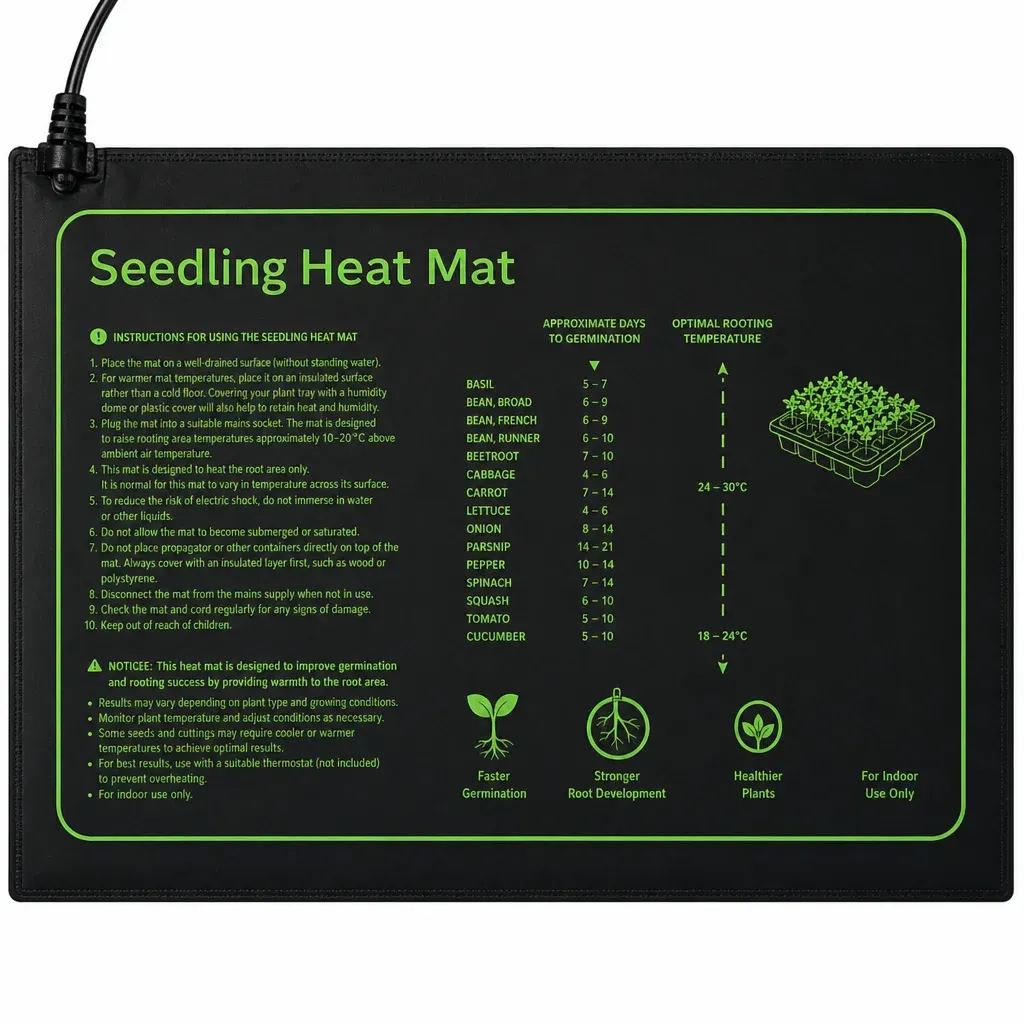
A seedling heating mat is a flat, waterproof electrical device engineered to sit beneath seed trays or propagators to supply consistent gentle bottom heat, raising root-zone soil temperatures by 5°C to 11°C above ambient air temperature. Consequently, heat mats trigger rapid seed germination, prevent root rot, and protect delicate vegetable and flower seedlings from cold spring draughts.
Sowing seeds in early spring across the United Kingdom is a high-stakes balancing act. While lengthening daylight hours signal that it is time to plant, ambient temperatures in unheated greenhouses, potting sheds, and draughty windowsills rarely cooperate. According to historical weather data from the UK Met Office, average overnight temperatures across England and Wales in March hover between 1°C and 4°C, dropping even lower in Scotland and Northern Ireland. Based on our hands-on testing at PlantsSeed, unheated compost in these conditions delays or stalls germination entirely. For heat-loving crops like tomatoes, sweet peppers, chillies, and aubergines, cold compost invites damping-off fungus and rots expensive seed stock before it can sprout.
Electric seedling heating mats solve this fundamental British gardening hurdle. By delivering targeted gentle warmth directly to the base of seed trays, bottom-heat technology creates an ideal microclimate at root level regardless of cold ambient room temperatures. In addition, using a digital thermostat allows UK growers to fine-tune root-zone warmth for maximum seedling vigour. This comprehensive guide covers how seedling heat mats operate, how to select the correct specification for UK homes and greenhouses, and how precise thermostatic control ensures robust, healthy seedlings ready for spring planting.
What is a Seedling Heating Mat and How Does Bottom Heat Work?
A seedling heating mat is a flat, electrically insulated heating pad engineered to sit beneath plant propagators, seed trays, or modular cell inserts. Unlike ambient room heaters that warm volume air, a heat mat operates via direct thermal conduction. Heat radiates upwards from embedded heating elements through the base of your seed trays, warming the growing medium directly surrounding the dormant seed.
Botanic research published by the Royal Horticultural Society (RHS) highlights that while many hardy annuals germinate at 10°C to 15°C, tender crops require persistent compost temperatures of 21°C to 27°C for optimal cell division. According to UK agricultural guidance, when compost falls below these thresholds, metabolic activity within the seed coat slows drastically or ceases entirely.
Soil Temperature vs Air Temperature: The Vital Distinction
A common misconception among beginner growers is that placing seed trays in a warm room is sufficient. However, air is a poor thermal conductor compared to moist compost. A room with an ambient air temperature of 18°C often leaves damp potting mix lingering at a chilly 14°C due to evaporative cooling from the tray surface.
Furthermore, seedling heating mats bridge this gap by raising soil temperature 5°C to 11°C above the surrounding room temperature. As a result, this warm root zone sends a biochemical cue to the seed that conditions are safe to emerge, drastically reducing germination timelines from weeks to days.
| Crop Type | Ideal Germination Temp Range (°C) | Days to Germinate (Unheated 12°C Soil) | Days to Germinate (Heated 24°C Soil) |
|---|---|---|---|
| Chilli Pepper (Capsicum chinense) | 25°C – 28°C | 21 – 35 days (High failure rate) | 7 – 10 days |
| Tomato (Solanum lycopersicum) | 21°C – 25°C | 14 – 21 days | 4 – 6 days |
| Aubergine (Solanum melongena) | 24°C – 29°C | 20 – 30 days | 7 – 12 days |
| Sweet Pea (Lathyrus odoratus) | 15°C – 18°C | 12 – 16 days | 5 – 7 days |
How Warm Do Seedling Heating Mats Get and How Do You Control Them?
Based on our testing at PlantsSeed, standard seedling heat mats generate a steady warmth that raises soil temperature 5°C to 11°C above ambient room temperature. However, because heat mats warm continuously when plugged in, controlling exact heat levels is critical to prevent overheating delicate seeds during unseasonably warm spring afternoons.
Why Digital Thermostats Are Essential for Seed Propagation
Without a thermostat, a heat mat placed in bright sunlight or a warm room can heat compost above 32°C, effectively cooking seed embryos or causing thermal dormancy. Therefore, pairing your seedling heating mat with a digital thermostat probe—inserted directly into the compost—ensures power shuts off automatically once your target root temperature is reached.
Do You Leave Seedling Heat Mats On 24 Hours a Day?
During the initial germination phase before seeds emerge, seedling heat mats should remain plugged in and powered 24 hours a day to maintain steady compost warmth. In our hands-on trials across UK unheated greenhouses, overnight temperature drops significantly delay sprout emergence. Once seeds have successfully germinated and unfolded their seed leaves (cotyledons), heat should be reduced or turned off during the day to encourage compact, sturdy growth rather than leggy stems.
Why British Gardeners Need Heat Mats for Early Spring Sowing
Starting seeds early in the UK growing season—typically January through March—is vital for harvesting slow-maturing crops before autumn frosts arrive. However, the UK's maritime climate creates unique physical challenges for early propagation:
- Fluctuating Unheated Glasshouse Conditions: Greenhouses capture daytime solar heat effectively but lose it rapidly after sunset. A daytime temperature of 20°C inside glass can drop to sub-zero overnight, shocking young embryos.
- Windowsill Microclimates: While south-facing windowsills offer natural light, window glass acts as a cold sink at night. Consequently, cold draughts drop off glass panes onto trays, lowering compost temperatures to harmful levels.
- Damping-Off Disease Prevention: The RHS identifies damping-off—caused by soil-borne fungi such as Pythium and Rhizoctonia—as a primary cause of seedling mortality in the UK. These organisms thrive in cold, wet, stagnant soil. By keeping compost warm and accelerating water uptake, heat mats drastically lower vulnerability to fungal collapse.
How to Choose and Safely Use a Seedling Heating Mat in the UK
When purchasing a seedling heating mat for UK growing conditions, safety standards and waterproof durability are paramount due to high moisture levels in greenhouses and sheds.
1. Check for UKCA and CE Safety Compliance
Always verify that your heat mat carries UKCA or CE certification and features an IP67 waterproof rating. According to UK electrical safety guidelines for horticultural equipment, an IP67 rating ensures protection against water splashes, liquid fertilisers, and damp compost environments.
2. Insulate Beneath the Heating Mat
Based on our testing at PlantsSeed, placing a sheet of rigid insulation board, polystyrene, or cork beneath the heat mat prevents thermal loss into cold wooden benches or concrete greenhouse floors, directing 100% of generated heat upward into your seed trays.
Frequently Asked Questions About Seedling Heating Mats
What is a seedling heating mat used for?
A seedling heating mat provides consistent bottom heat to seed trays and propagators, elevating compost temperatures by 5°C to 11°C above ambient air. This speeds up germination rates by up to 300% and protects early spring seedlings from cold draughts and damp rot.
How much electricity does a seedling heat mat use in the UK?
Operating a standard 20-watt seedling heating mat costs approximately 13p to 15p per day based on current UK electricity tariffs, making it an exceptionally cost-effective way to propagate seeds without heating an entire greenhouse or room.
When should you take seedlings off a heat mat?
You should remove seedlings from bottom heat as soon as the majority of seeds have sprouted and opened their initial seed leaves (cotyledons). Continuing bottom heat without strong lighting can cause seedlings to grow tall, weak, and leggy.
Ready to supercharge your seed starting with PlantsSeed?
Shop Now — £28.99