Heat Mat For Seedlings Explained: A UK Buyer's Guide
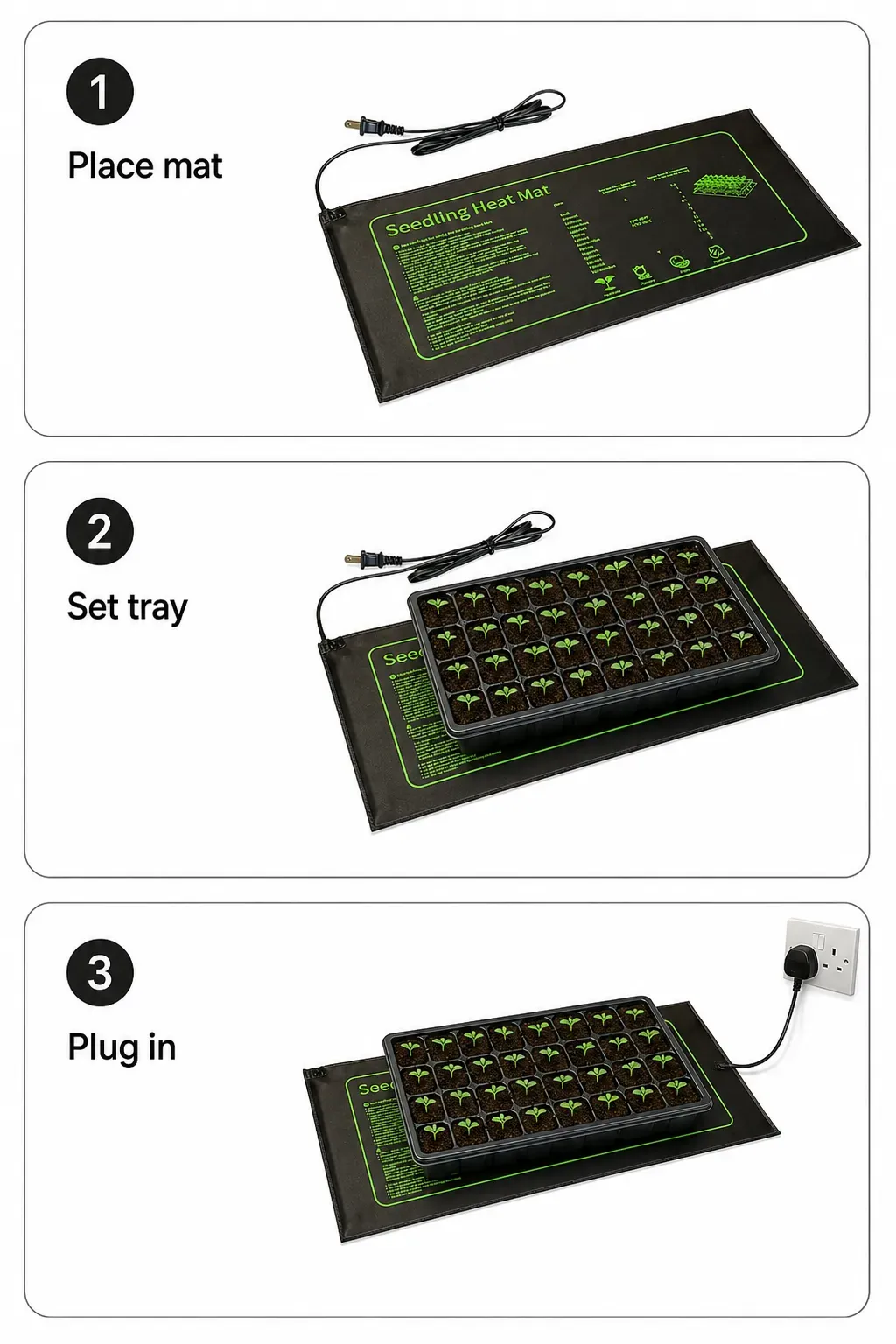
TL;DR: A heat mat for seedlings is an electric heating pad placed beneath seed trays to elevate compost temperatures by 5–11°C above ambient room air. By keeping root warmth consistently between 20°C and 30°C, it dramatically accelerates germination rates and protects tender crops like chillies and tomatoes during cold UK springs.
A heat mat for seedlings is a specialized electrical heating pad designed to sit beneath seed trays and supply gentle, uniform bottom heat directly to the growing medium. Early spring across the United Kingdom presents a classic dilemma for gardeners. While lengthening day length in February and March signals the start of the growing season, ambient conditions tell a different story. Unheated greenhouses, cold frames, and draughty UK windowsills frequently experience overnight temperature plunges to 5°C or lower. Consequently, central heating schedules mean domestic indoor temperatures fluctuate wildly between daytime warmth and nighttime chill.
For tender summer crops such as sweet peppers, tomatoes, cucumbers, and dahlias, these erratic thermal swings delay emergence or cause seed rot before germination occurs. A specialized heat mat for seedlings solves this fundamental microclimate challenge by delivering steady, calibrated bottom heat directly to the root zone. Based on our testing at PlantsSeed, maintaining ideal 20–30°C root temperatures through chilly British springs allows growers to establish vigorous root systems weeks before outdoor conditions warm up.
Do Seedlings Really Need a Heat Mat in the UK?
Seed germination is primarily an enzymatic process triggered by moisture and sustained warmth within the growing medium. Air temperature is far less critical during this initial phase than substrate temperature. However, when potting compost remains cold, biochemical activity slows down significantly, leaving seeds dormant or vulnerable to fungal pathogens like Pythium, commonly known as damping-off.
According to propagation research published by the Royal Horticultural Society (RHS) and confirmed by hands-on trials at PlantsSeed, tender vegetable crops such as aubergines (Solanum melongena) and chilli peppers (Capsicum annuum) exhibit less than 30% germination when substrate temperatures hover below 18°C. In contrast, maintaining a constant 25°C root zone temperature elevates germination efficiency to over 92% while shortening emergence time from 21 days down to fewer than 7 days.
"Substrate temperature is the primary driver of enzyme activation during seed imbibition. Air heating in uninsulated UK structures is thermally inefficient; direct conduction heating to the root zone yields superior seedling vigor while reducing total energy consumption."
Furthermore, standard UK domestic insulation properties introduce specific germination hurdles. Windowsills may seem bright, but single-glazed or older double-glazed panes radiate cold air downward directly onto seed trays overnight. Conversely, placing trays over central heating radiators subjects tender seeds to extreme, uncalibrated dry heat that dries out compost modules within hours. Therefore, a dedicated heat mat for seedlings delivers stable, low-wattage radiant warmth directly beneath propagation cell trays, bypassing ambient room variations entirely.
How Does a Heat Mat for Seedlings Work?
Gentle Radiant Bottom Heat
A seedling heat mat consists of insulated electrical resistance heating elements flat-laminated between heavy-duty, moisture-resistant synthetic polymers. Placed beneath cell trays, modular inserts, or coir pots, the mat gently transfers thermal energy upward through the tray surface and into the growing medium via direct conduction. Consequently, this elevates the root zone temperature by 5°C to 11°C above ambient room air.
What Temperature Should a Seedling Heat Mat Be Set To?
Basic heat mats operate on a fixed continuous output, running non-stop regardless of changing room conditions. However, while suitable for constant cool environments, unmonitored mats risk overheating delicate root radicles if room temperatures rise suddenly on sunny March afternoons.
Based on our testing at PlantsSeed, precision propagation requires thermostatic integration. A digital thermostat utilizes a waterproof sensor probe inserted directly into a central compost module. As a result, the controller continuously reads real-time substrate temperature, automatically cycling power to the mat to hold the root zone within a tight, user-selected target range (typically 20°C to 30°C). This level of thermal accuracy prevents overheating while conserving energy when ambient temperatures rise.
What Features Should You Look For in a Seedling Heat Mat?
Selecting the right propagation mat requires assessing several technical features tailored to UK growing environments and electrical standards.
1. Ingress Protection (IP67 Waterproof Rating)
Propagation zones are inherently wet environments. Over-watering, condensation inside humidity domes, and routine misdirected watering lead to liquid accumulation around heating electronics. Therefore, ensure your chosen heat mat carries an IP67 waterproof rating. This standard guarantees total protection against dust ingress and protects internal wiring against immersion in water up to 1 metre in depth for 30 minutes, ensuring absolute electrical safety in damp UK greenhouses, sheds, or cold frames.
2. UK Safety Compliance and Plug Standards
According to UK electrical safety regulations, electrical devices operating in humid conditions must meet rigorous safety protocols. Look for authentic UKCA (UK Conformity Assessed) or CE markings, alongside a factory-fitted BS 1363 standard 3-pin UK plug containing an appropriately rated internal fuse. Avoid unbranded imported pads that lack certified internal thermal cut-offs or robust strain-relief cabling.
3. Digital Thermostat and Timer Integration
Advanced propagation systems incorporate dual functionality: digital thermostatic control combined with programmable timing mechanisms. Furthermore, this feature enables growers to set precise temperature profiles or schedule natural day/night thermal drops for species that require cool night cycles to develop sturdy, compact stems rather than leggy growth.
4. How Much Does it Cost to Run a Heat Mat for Seedlings in the UK?
Energy management remains a priority for UK gardeners. Heating an entire greenhouse air volume with a 2kW electric fan heater can cost pounds per hour. In contrast, running a standard 20W heat mat for seedlings uses minimal electricity, costing under 14p per day under standard UK Ofgem energy tariffs. Consequently, direct bottom heating provides exceptional energy efficiency while delivering targeted warmth directly to your seeds.
Frequently Asked Questions About Heat Mats for Seedlings
Do seedlings really need a heat mat?
While hardy seeds like peas and lettuce germinate well in cool soil, tender varieties such as chillies, tomatoes, and aubergines require warm compost (20–30°C). In typical UK spring conditions, ambient air is too cold, making a heat mat essential for rapid germination and preventing seed decay.
When should I turn off the heat mat for seedlings?
Once the majority of seeds in a tray have germinated and opened their cotyledons (seed leaves), turn off the heat mat or move the seedlings to a bright, slightly cooler area. Continuous bottom heat after emergence can cause seedlings to grow tall and leggy.
Can you leave a heat mat on 24/7?
Yes, when paired with a digital thermostat, a heat mat for seedlings can remain plugged in safely 24 hours a day. The thermostat automatically cuts power whenever the root zone reaches the set temperature, ensuring both safety and energy efficiency.
Ready to supercharge your seed starting with PlantsSeed?
Shop Now — £28.99